Delhi Burns 30-Foot Cockroach Effigy Alongside Ravana on Dussehra
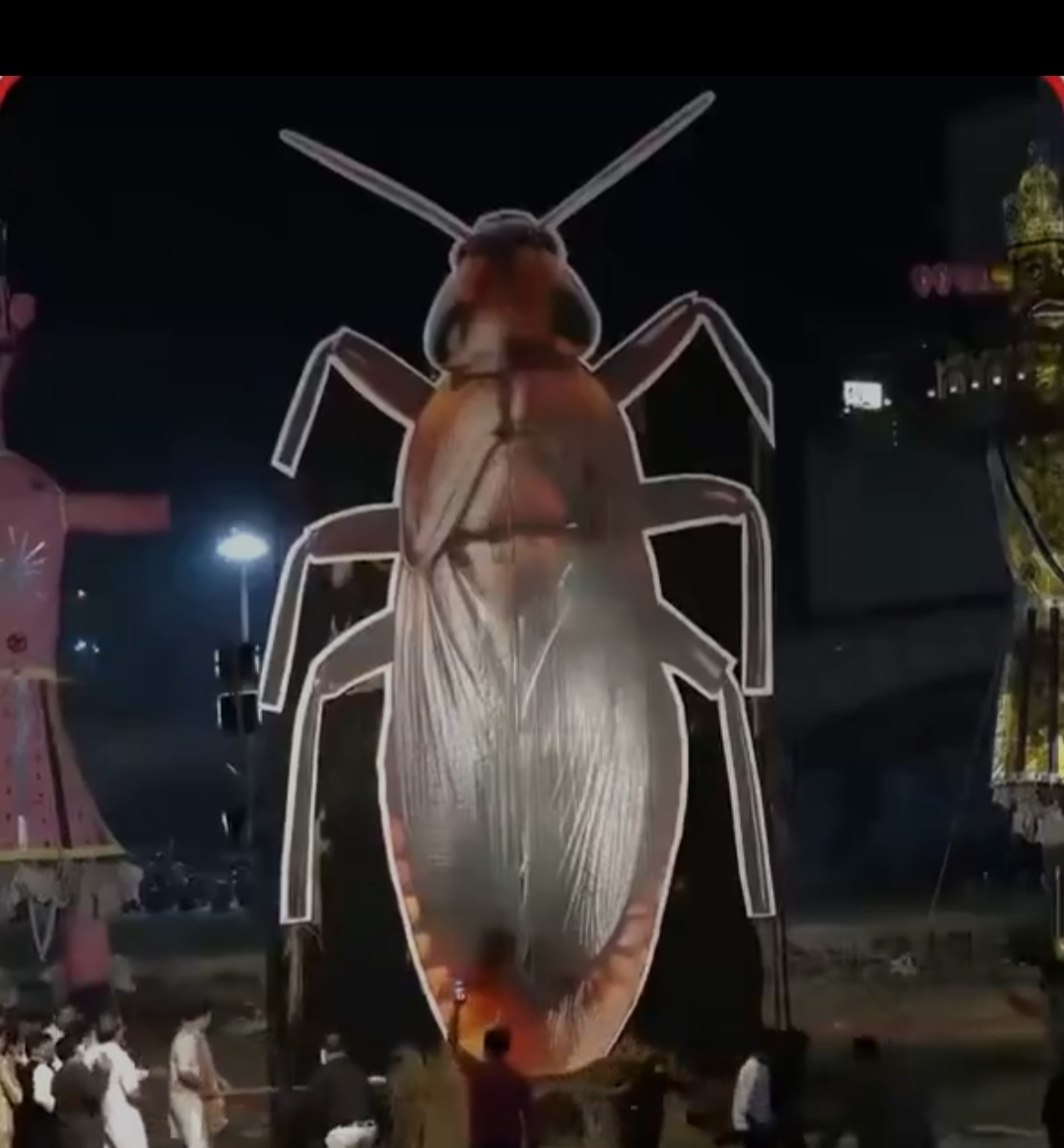
Delhi's Dussehra celebrations took an unusual turn when a 30-foot-tall cockroach effigy was burned alongside the traditional effigies of Ravana, Kumbhakarna and Meghnad at an event in Pitampura. Organised by the Shree Keshav Ram Leela Committee, the spectacle attracted public attention because of its unusual addition to the annual festivities. The incident subsequently became a subject of political debate, with questions emerging about the symbolism behind the effigy's inclusion.
According to reports, the organisers presented the cockroach effigy as part of a cleanliness awareness initiative. They said the insect represented dirt and unhygienic surroundings, and that burning it was intended to promote the message of a cleaner Delhi and a cleaner India. The organisers maintained that the initiative was connected to sanitation rather than political confrontation.
The event took place amid wider attention surrounding the Cockroach Janata Party (CJP), a protest movement that has attracted attention through its use of cockroach imagery. The movement has been associated with criticism of political and electoral institutions, including demands for the resignation of Chief Election Commissioner Gyanesh Kumar. The overlap between the movement's symbolism and the effigy's appearance contributed to public discussion about whether the event carried a political message.
However, the organisers rejected the suggestion that the cockroach effigy was intended as a political statement. Ashok Goel, the committee's president and a BJP legislator, reportedly said the purpose was to promote cleanliness and denied any connection with the CJP protests. His explanation is an important part of the controversy, as the intended meaning of the effigy has been disputed by political figures and observers.
The incident also prompted a reaction from Aam Aadmi Party leader Saurabh Bharadwaj, who reportedly filed a complaint against the organisers. Bharadwaj raised objections to the effigy's burning and alleged that the act hurt religious sentiments. These statements represent his allegations and should not be treated as a judicial finding or proof of wrongdoing by the organisers.
Dussehra traditionally marks the victory of good over evil and is celebrated through the burning of Ravana's effigy in many parts of India. Local organisers sometimes introduce additional themes to highlight social concerns, including pollution, corruption or cleanliness. In this case, the inclusion of a giant cockroach added an unconventional element to the celebrations and brought the event into the wider political conversation.
The controversy illustrates how public festivals can become platforms for competing interpretations of a symbolic act. While the organisers described the effigy as a sanitation message, critics questioned its significance in the context of ongoing political protests. Establishing whether the act was intended to target a particular organisation would require evidence beyond the timing of the event or similarities in symbolism.
The burning of the 30-foot cockroach effigy has therefore become a story about both an unusual Dussehra spectacle and the political debate surrounding its interpretation. The organisers' stated cleanliness objective, the CJP's use of cockroach imagery and the complaint reported by an AAP leader should be presented separately. Further developments will depend on verified statements and any official action arising from the complaint.